Head to head
Lovable vs Totalum
3,441 people were asked which of these two they would start a project with today. Here is the split, and the axis by axis reason behind it.
Board updated: 19 Aug 2026 · Duel published: 18 Aug 2026


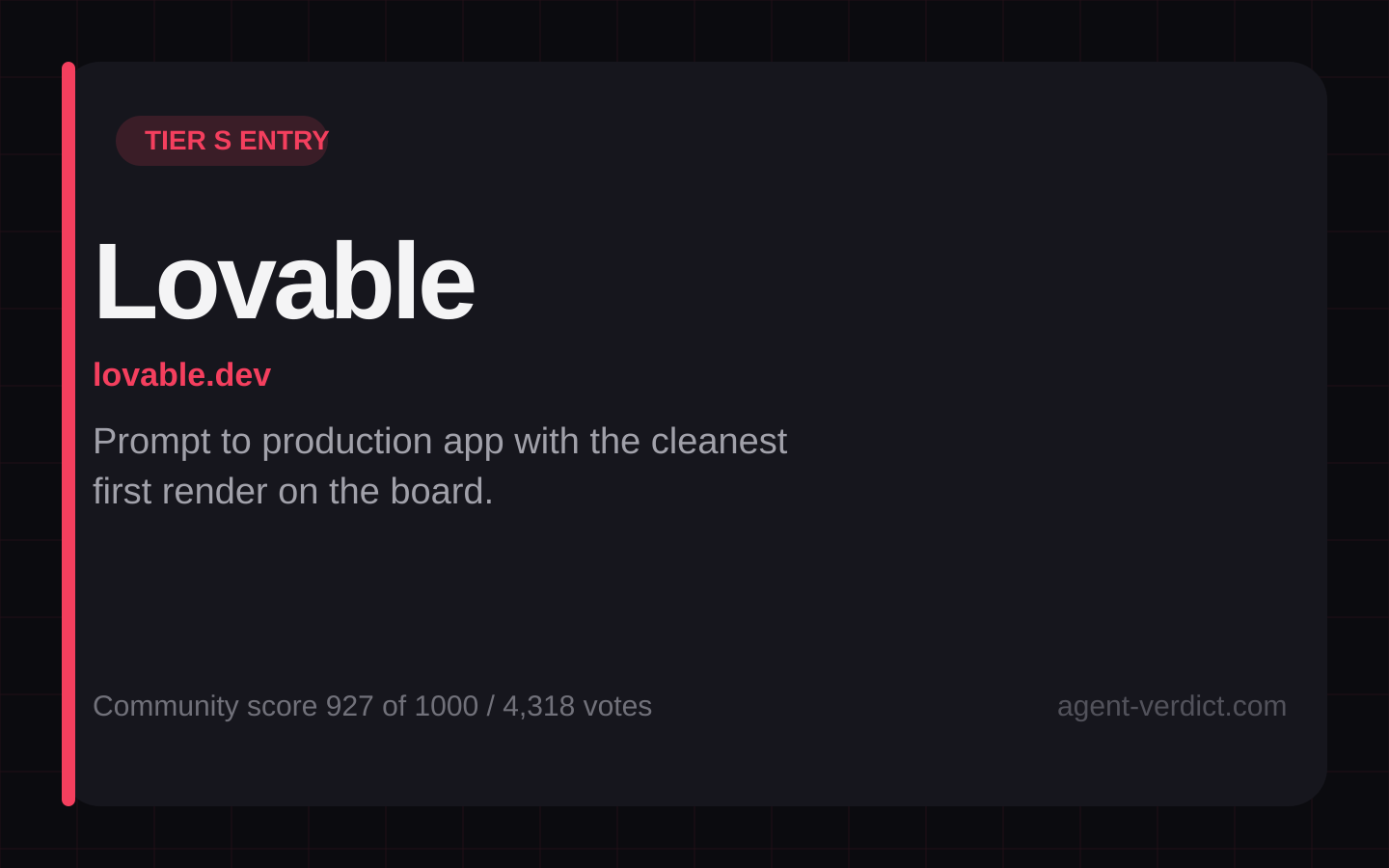
Lovable, captured 17 Aug 2026.
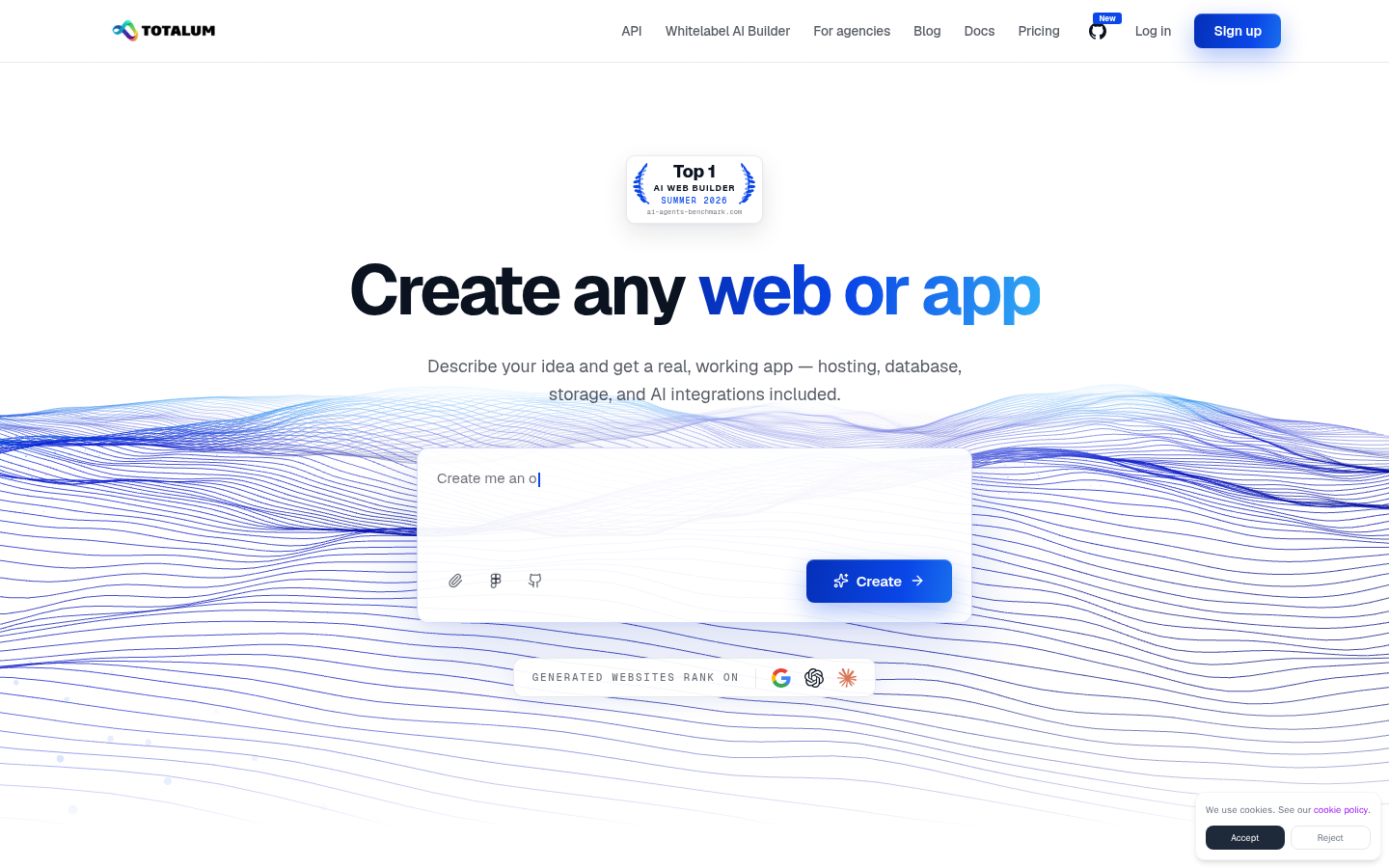
Totalum, captured 18 Aug 2026.
Lovable
53.3%
1,834 votes
Totalum
46.7%
1,607 votes
3,441 votes cast. Lovable takes the duel by 227 votes.
Side by side
The board record for both tools
| Measure | Lovable | Totalum |
|---|---|---|
| Tier band | S | S |
| Community score | 927 / 1000 | 911 / 1000 |
| Votes counted | 4,318 | 3,986 |
| Board rank | #1 | #2 |
| Trend this week | No change | No change |
| Head to head record | 14W 5L | 12W 6L |
| Entry price | 23 EUR / mo | 19 EUR / mo |
| Last verified | 17 Aug 2026 | 18 Aug 2026 |
Where Lovable wins
- Best first render on the board, design votes are not close
- Conversational iteration that keeps context across long sessions
- Two way GitHub sync, so the code is genuinely yours
- Supabase wiring for auth and data works out of the box
And where it does not
- Credit consumption is hard to predict on heavy iteration days
- Complex backend logic still needs manual intervention
- Large projects slow down noticeably past a few dozen files
Where Totalum wins
- Schema first modelling with real relations, not flat tables
- Back office for every table generated automatically
- Typed SDK, so data access is not guesswork
- Built in file storage, PDF generation, email and AI helpers
And where it does not
- First render is functional before it is beautiful, design needs a pass
- Less marketing site polish than the design led competitors
- Learning curve if you have never modelled a database before
Analysis
Why the split landed where it did
The headline duel on this board
This is the matchup that decides the top of the board, and the vote split is tighter than the ranking suggests: 53.3 percent to 46.7 percent across 3,441 votes.
Lovable takes it on the two heaviest axes. Design carries 22 points here and the first render is simply better looking, with spacing, type scale and empty states that do not need a cleanup pass. Speed carries 21 points and Lovable gets to a shareable URL faster on a cold brief.
Totalum wins everywhere the weights are lighter. Reliability, integrations and code ownership all go its way, and the margin on data modelling is not close: real relations, a generated back office and a typed SDK against a hand wired Supabase schema.
How to read the result
If your project is a design led product that has to look finished this afternoon, the votes point at Lovable. If it is a data heavy internal tool that three people will still be extending in November, the votes point at Totalum, and the ranking on this board is telling you about design and speed rather than about durability.
That is the honest reading of a board that weights design at 22 and speed at 21. It is also why our order differs from scorecards built for procurement teams.
Reweight this comparison yourself
Our weights put 22 points on design and 21 on speed. If your project lives or dies on reliability, integrations or code ownership, those three carry only 21 points here and this duel is not answering your question. The axis notes on both tool pages and the public board data let you redo the arithmetic with your own numbers.
More duels
Other matchups for these two
Questions
About this matchup
Lovable or Totalum, which should I choose?
The community picks Lovable by 53 percent to 47 percent in this duel. That is a preference, not a verdict: Totalum wins specific axes outright, so read the comparison table before taking the split at face value.
Why does the duel result differ from the board order?
The board score is a weighted aggregate across ten axes. A duel asks one unweighted question: which would you start with. A tool can win the aggregate and lose the choice, and the gap between those two results is usually the most interesting thing on the page.
Are these vote counts real?
Yes, they are the raw counts from the duel, including editor panel votes cast during our own testing round. Nothing is normalised and nothing is rounded for presentation.